
When Should a Developer Engage an Artist?
One of the most common questions I hear from developers, architects, project managers and local governments is when public art should be considered within a project. The answer is simple: earlier than most people think.
Many public art commissions begin after the architecture has been resolved, the landscape design is largely complete and key project decisions have already been made. While successful outcomes are still possible at this stage, the most effective public art projects are typically those where an artist is engaged during the early planning and design phases.
Across Perth and regional Western Australia, public art is increasingly being incorporated into residential developments, healthcare facilities, schools, transport infrastructure, civic spaces and commercial projects. As expectations around placemaking and project identity continue to evolve, public art is no longer viewed as an optional addition. It is increasingly becoming an important component of the overall project vision.
Public Art Is More Than an Artwork
When people hear the term public art, they often think of a sculpture sitting within a plaza or a mural applied to a completed wall. In practice, public art can take many forms and influence a project in far broader ways. When considered early, artwork can become integrated into architecture, landscape
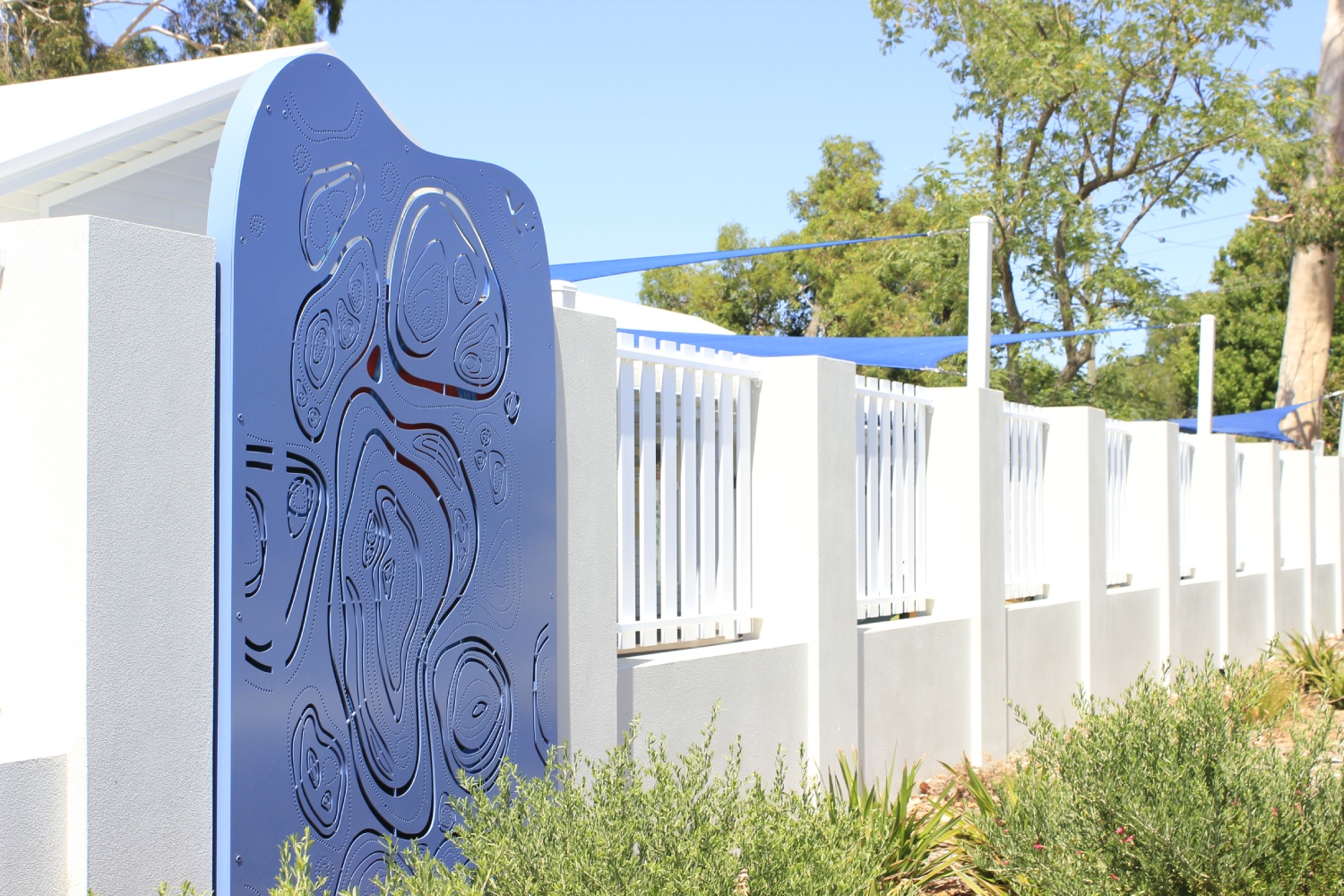
and public space. Opportunities may include architectural screening, facade treatments, glazing, paving, soffits, ceilings, wayfinding elements, entry statements, landscape features, sculptural works and public realm interventions.
Rather than asking where an artwork can be placed, project teams can begin exploring how creativity can become part of the overall experience of the site. This shift in thinking often leads to stronger and more distinctive outcomes.
Why Early Engagement Creates Better Opportunities
The earlier an artist becomes involved, the more opportunities exist for meaningful integration. During concept and design development, architects, landscape architects, engineers and artists can work together to identify opportunities that may otherwise be missed.
For example, a screening element may become both a functional architectural feature and a significant artwork. A public plaza may incorporate artistic elements within paving, seating or shade structures. A transport project may integrate artistic responses throughout the user journey rather than relying on a single standalone artwork.
These opportunities are far more difficult to achieve once construction documentation has been completed. Early engagement also allows public art to respond more authentically to site conditions, local history, ecology, movement patterns and community aspirations.
Supporting Development Approval Processes
Many local governments throughout Western Australia encourage or require public art as part of planning approvals, development approvals or broader placemaking objectives. Public art may form part of a planning approval process, a development contribution, a public realm strategy or a broader placemaking initiative.
Engaging an artist early can assist project teams in identifying opportunities, developing concepts and preparing supporting material that aligns with approval requirements. It also provides greater flexibility when considering budgets, staging, maintenance requirements and long-term project objectives
Creating More Distinctive Developments
In increasingly competitive markets, creating a memorable project identity has never been more important. Public art can help distinguish a development from neighbouring projects while contributing to a stronger sense of place. This is particularly valuable for mixed-use developments, healthcare facilities,
schools, commercial precincts and residential communities where identity, community connection and user experience play a significant role in long-term success.
The most successful projects often create experiences that people remember instead of becoming spaces people simply pass through. Public art can contribute significantly to that outcome.
Public Art Across Perth and Regional Western Australia
Across Perth, public art has become a recognised component of many major developments, civic projects and infrastructure upgrades.
At the same time, regional communities throughout Western Australia continue to invest in public art, murals, sculpture and creative placemaking initiatives as a way of strengthening local identity, supporting tourism and enhancing public spaces. From Karratha, Port Hedland, Newman and Tom Price in the Pilbara to Geraldton, Kalgoorlie, Albany and Bunbury, public art is helping create places that reflect the unique character of each community.
Whether a project is located in metropolitan Perth or regional Western Australia, the principles remain the same: the strongest outcomes are typically achieved when public art is considered as part of the broader vision from the beginning.
The Best Time to Engage a Public Artist
The ideal time to engage a public artist is during the planning and design phase of a project. Early collaboration allows public art to become part of the conversation instead of something that must fit around decisions that have already been made.
For developers, architects, project managers and councils, this often results in more integrated, more memorable and more valuable outcomes.
Public art has the greatest potential when it is viewed not as an addition to a project, but as part of the project’s identity from the very start.