
Recent Posts
What Is Art, Really? Reconsidering Ordinary Objects
I’ve been thinking about this while making new work for Some Assembly Required, my upcoming exhibition with Eleonora Gugliotta at SAVA Gallery.
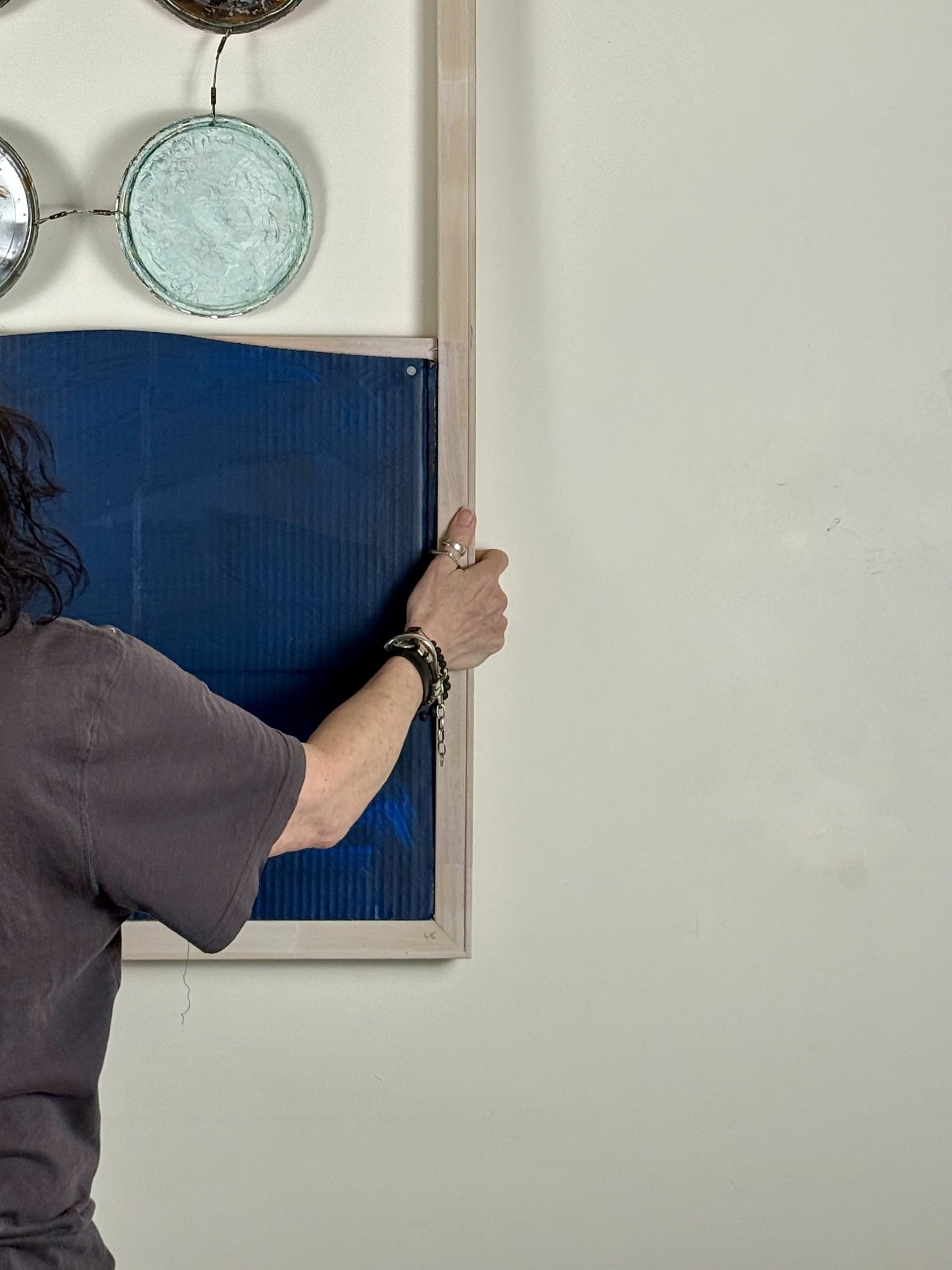
These works include painted mural rags, old clothing, plaster casts of paint trays, pegboard, builders line, timber and familiar pieces of hardware. Some of these materials have been used, discarded or simply overlooked. Others belong to the practical business of making and installing art.
I showed someone an in-progress photograph recently. They stared at it for a few seconds and said, “Ahh… interesting.” We both knew what that meant and had a good laugh.
It made me think again about how often people question whether something counts as art, especially when it doesn’t resemble a conventional painting or sculpture.
But what is it?
What does it mean?
Is that really art?
They are fair questions. Artists have been provoking them for a long time.
Duchamp placed a urinal in an art context more than a century ago. More recently, a banana duct-taped to a wall became one of the most widely discussed artworks in the world. The object itself was only part of each work. The ideas, choices, context and reactions surrounding it were equally significant.
I’m interested in what happens when an ordinary material is handled differently and placed in a new context. When does a rag stop being a rag? Does casting the impression of a plastic paint tray give it a different value? Can a D-ring remain recognisable as hardware while also becoming part of an artwork?
One of the works in the exhibition uses an empty stretcher frame turned around so its staples and construction remain visible. Pegboard and builders line occupy only part of it, leaving much of the expected picture plane empty. Another work places a painted rag within a jarrah structure with a rock and a D-ring. The D-ring is usually hidden behind an artwork. Here, it sits in plain sight as part of the composition.
The plaster works take this transformation further. They are casts of paint trays, not the trays themselves. An object normally used to create art leaves an imprint and becomes the subject of the artwork. Its function disappears, but its shape and evidence of use remain.
I enjoy changing the purpose of familiar objects. Recognition creates an interesting tension. Someone may identify a piece of hardware immediately and wonder why it is in a gallery. Someone else may respond to its shape, colour or placement without knowing what it was designed to do.
My work won’t appeal to everyone, and I’m comfortable with that. I like making art that creates intrigue and asks people to look harder. Confusion can be a useful beginning. It means the viewer has encountered something they can’t classify immediately.
I still care about composition, colour, balance and intent. My background in visual communication is always present, even when a work appears raw, awkward or precarious. Experimentation doesn’t mean that every decision is arbitrary. It means I’m willing to test materials and follow an idea somewhere unfamiliar.
So what makes something art? Is it artistic intention, transformation, context, authorship or the attention we give it? Does its value change when it enters a gallery? Does it need to be understood?
I don’t think there is any one answer and that’s what keeps the question interesting.
See the works
Some Assembly Required is a two-person contemporary art exhibition by Sioux Tempestt and Eleonora Gugliotta at SAVA Gallery.
Opening night: Friday 13 November 2026, 6-10pm tickets here
Further viewing: Sunday 15, Wednesday 18 and Sunday 22 November, 1-5pm
SAVA Gallery: 377 Railway Road, Shenton Park, Western Australia